

Vandoren Mouthpieces Explained
Both Vandoren Clarinet and Saxophone mouthpieces share the same construction and principles as follows:
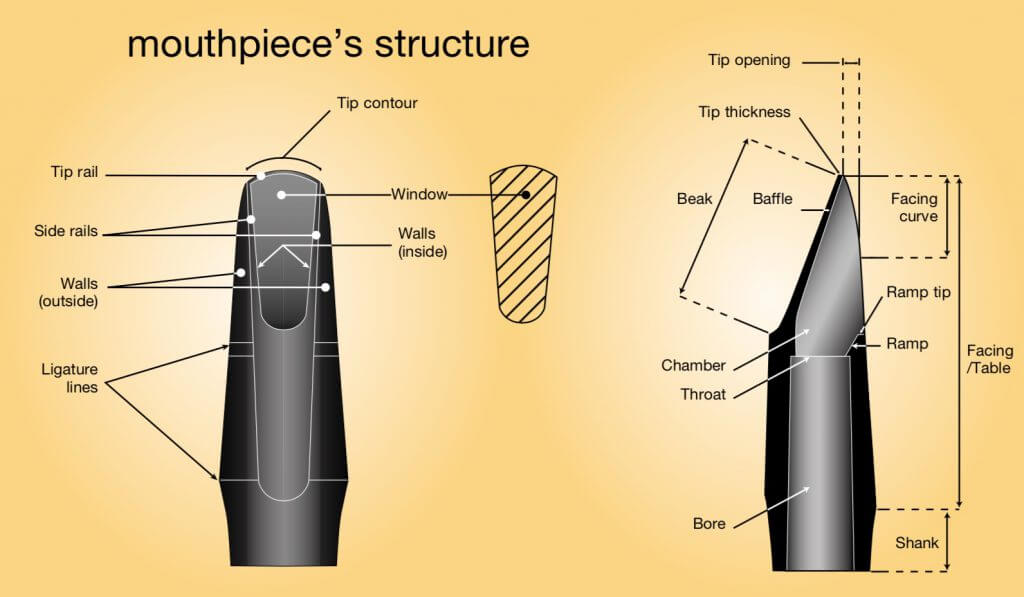
One of the most important aspects of a mouthpiece is the Tip Opening and Facing length:
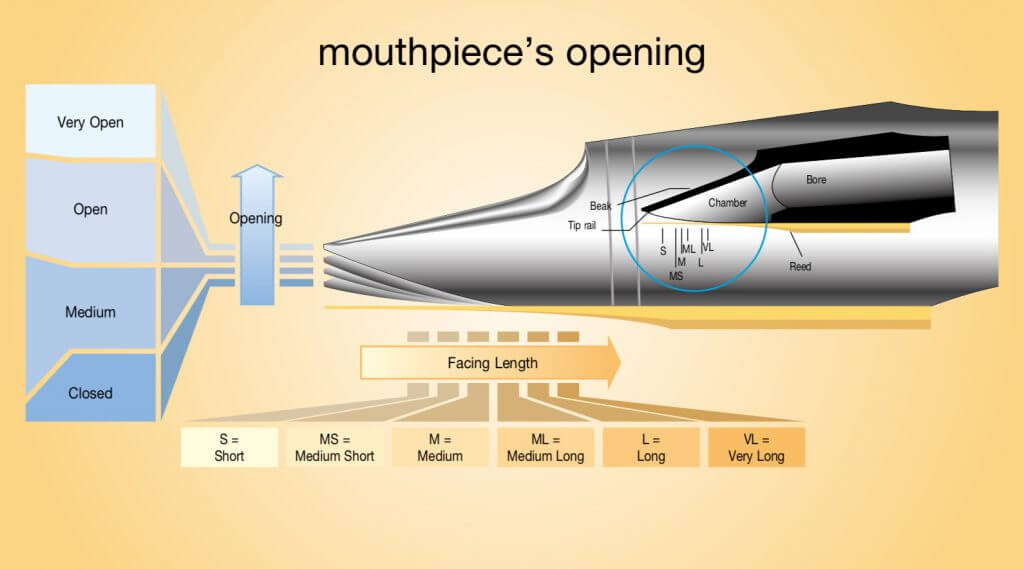
Think of the mouthpiece as the control centre of your sound:
- Tip Opening controls how much air gets through and how freely the reed can vibrate.
- Facing Length influences response, feel and reed compatibility.
Together, they affect ease of playing, tone, and the reed strength required. Generally, the wider the mouthpiece opening, the bigger and freer the sound, but the harder it is to control. The longer the facing, the more reed strength and flexibility you get, while shorter facings feel quicker and easier to play.
Tip Opening Explained
The Tip Opening is the gap between the tip of the reed and the tip of the mouthpiece (as pictured in the diagram above).
Closed Tip Openings have a smaller gap - a smaller opening is easier to control and is often preferred by beginners or players who want a more focused sound:
- Easier control.
- Better for beginners.
- Usually works better with harder reeds.
- Generally produces a more focused sound.
- Less volume and flexibility.
Open Tip Openings have a larger gap - producing a bigger, freer sound, but it takes more effort and control to play:
- More volume.
- More power and flexibility.
- Often favoured for jazz and expressive playing styles.
- Requires more air to support and embouchure control.
- Can be harder to control.
Facing Length Explained
The facing is the curved area where the reed gradually lifts away from the mouthpiece.
Short Facing - responds quickly and feels easy-blowing.
- Fast response.
- Easy to articulate notes.
- Often works well with softer reeds.
Long Facing - offers more tonal flexibility but often works best with slightly firmer reeds.
- More tonal flexibility.
- Feels smoother across dynamics.
- Often works well with stronger reeds.
Which Mouthpiece Is Right for Me?
"I'm a Beginner" Try:
- Closed to medium tip opening.
- Medium facing length.
- Medium reed strength.
"I want a bigger jazz sound" Try:
- More open tip opening.
- Softer reed to compensate.
"My mouthpiece feels too hard to blow" Try:
- More open mouthpiece.
- Softer reed.
"My reed feels too soft and buzzy" Try:
- More closed mouthpiece.
- Stronger reed.
"I Want Easier High Notes" Try:
- Medium to slightly open tip opening.
- Medium facing.
- Don't go too hard on reed strength.
"I Want a Darker, Warmer Sound" Try:
- Longer facing.
- Slightly stronger reed.
- Consider a mouthpiece with a larger chamber (where applicable).
"I Want a Brighter, More Powerful Sound" Try:
- More open tip opening.
- Softer reed.
- Consider mouthpieces designed for projection.
"My Sound Feels Thin" Try:
- Slightly stronger reed.
- Longer facing.
- Focus on matching the reed strength to the mouthpiece.
"I Struggle to Get Notes Started Cleanly" Try:
- Shorter facing.
- Slightly softer reed.
"I Play Mostly Classical Music" Try:
- Closed to medium tip opening.
- Medium to long facing.
- Medium to stronger reed.
"I Play Mostly Jazz, Rock or Pop" Try:
- Medium to open tip opening.
- Softer reed.
"I'm Moving Up From My First Mouthpiece" Try:
- Increase tip opening gradually.
- Keep a familiar reed strength at first.
- Make one change at a time.
Remember: there are no strict rules when choosing a mouthpiece. The ideal tip opening, facing and reed strength depend on the player, instrument and musical style. These guidelines are designed to help you find a suitable starting point.
- View all Vandoren Clarinet Mouthpieces
- View all Vandoren Clarinet Reeds
- View all Vandoren Saxophone Mouthpieces
- View all Vandoren Saxophone Reeds
- Ligatures Explained
- View all Vandoren Ligatures